Reflecting on Star Fox Zero
 If you told me a few weeks ago that this would be the latest digital vice grip on my attention span, I wouldn’t call you a liar, but I would certainly be interested in seeing what exactly got me here.
Truthfully, Star Fox Zero is a title that’s never fully left my cortex in the time since I first played it. As an extremely well adjusted person who keeps his Wii U plugged in at all times, nobody’s favorite Star Fox game is frequently in consideration whenever I scan my shelf for games to play, but the thought of cold starting that part of my brain after so much time away from anything Star Fox related always pushed me past it quick (hilarious in retrospect considering I needed a new Wii U gamepad charger to play this anyway, something I didn’t realize until a week ago at the time of writing). In any case, after getting my N64 back from my brother and doing a few casual runs of Star Fox 64, something finally possessed me to sink real time into Zero, and to say I’m glad I did would be an understatement.
Cards on the table: I’ve always been a fan of Star Fox Zero, but I’ve never exactly been on the frontlines of its defense. I was far too busy shaping my personality through Smash 4 back in 2016 for it to be a game I prioritized checking out, and even after finally playing (and really enjoying!) it in 2021, my investment largely began and ended within the confines of that initial playthrough. Once my Wii U was put in the bin for a time at the advent of the Switch, nothing really lined up for me to finally stop larping as a Star Fox Zero nut, and it simply remained as a sealed memory for a while. That time has passed however, and now that the stars have finally aligned for me to sit back down and rediscover this game just in time for its 10 year anniversary, I find myself far more synchronized with its intricacies and nuances than I ever was before.
Playing them back to back, I was struck by just how much of Zero was influenced by 64’s design, but the operative word here really is just “influenced”. While surface level discussion of Zero is obsessed with it’s existence as a remake/retelling of 64, the actual flavor of the text couldn’t be more different. You’ll fly through familiar vistas, hear familiar melodies, fight familiar bosses, but the finer details have been contorted beyond recognition. If an old idea or encounter wasn’t literally expanded with an extra dimension, its likely been flipped on its head or shuffled around entirely. During my recent runs I thought a lot about the Resident Evil Remake, a title that (from my understanding) operates under a similar mission statement: take the player’s expectations from the past, lure them in with familiar bookends, and completely scramble the contents of the experience to provide something wholly unique.
One interesting area where this philosophy manifests is in its alternate routes. To many, the defining feature of Star Fox 64 was it’s 3 branching paths on the way to the end, allowing the player to make decisions based on their current stage to find alternate exits and open routes to brand new stages. Star Fox Zero similarly supports alternate stages opened up through hidden exits, but the similarities stop there. While a standard run of Zero always begins and ends the same as 64, theres considerably less freedom in how the player can chart their way through the Lylat system here. Only certain stages have alternate exits, but most crucially, these exits can only be discovered on replays of levels. For a game who’s DNA is deeply rooted in the structure of a compact linear arcade game, this shatters one of the most valuable benefits of a route system and flattens every fresh file playthrough into one static route if one were to maintain the illusion of an arcade experience. I would be lying through my teeth if I said I totally preferred this system to the one featured in 64, but like the other twists on familiar elements, considerations have still been made here to make the decision feel justified for this experience.
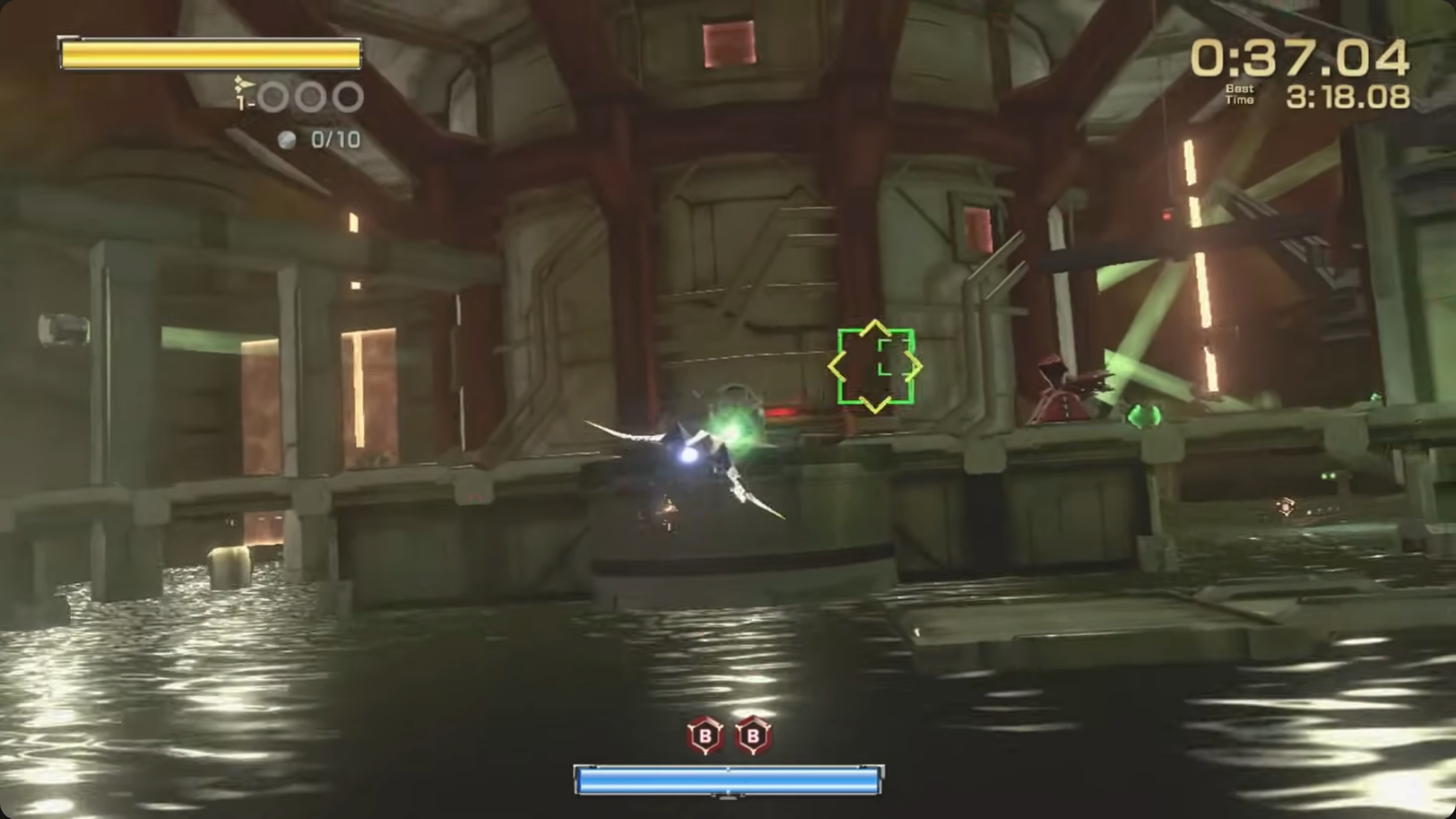
Eagle-eyed readers largely married to Star Fox 64 have likely noticed my earlier mention of level replays, and yes, any level can be played independent of the story route an infinite number of times without sacrificing lives, the journey does not end after conquering Venom and taking down Andross. This is a map you’ll be expanding long after the credits, with only about half the game’s levels being placed along the primary route on your first go. Considering that the true objective of a Star Fox game is mastering individual levels and collecting every in-game medal, this is where the value of Zero’s approach really comes into focus. Likely influenced by Platinum’s design methodology when it comes to rank chasing in their action games, the open approach here makes it far more appealing to try and fill out the map compared to 64, a game that, while undeniably sharper, is far more exhausting to complete when it can theoretically take an entire run to even attempt the level where you’re missing a medal.
While the level pathing makes it more approachable to reach for mastery of the game, I’m not sure I’ve seen anything push players away from a game quite like Star Fox Zero’s controls. If you’ve read this far I doubt I need to tell you why they’ve been so controversial over the years (it’s basically all anyone can talk about when discussing the game), but I don’t want this preamble to just be in service of putting down shallow criticisms that are now a decade old at this point. Instead, I really just want this article to be a beacon of positivity for a game that really could use some help in that department, because I really do believe this is a shining star of the Wii U library and the controls truly do elevate the experience on all fronts.
Rather than solely relying on motion controls during regular gameplay, Star Fox Zero actually preserves a key element to 64’s game feel by still allowing the player to aim the ship and your aiming reticle in one input with the analog stick while relegating motion controls to an additional layer of aiming directly overtop of that. A setting in the pause menu even allows for motion controls to be locked entirely behind the dependency of aiming - something that can likely go a long way in making the game feel less disorienting for players at the start - but keeping a steady grip on the gamepad allows for motion aiming to only kick in when you specifically want it to, which is generally how I prefer to play (on that note, playing at a desk while being able to rest my hands down with the gamepad during moments of ease was extremely comfortable, I don’t think I’d have quite as good a time if I played this on my couch or something). While this does strip away a rule of the Star Fox formula where players must put themselves in the way of danger to be on the offensive, on the whole this opens the door for a dizzying amount of control over enemies and stage hazards, while simultaneously allowing the developers to craft absurd remixes of 64’s campaign to accommodate for this buff to the player.
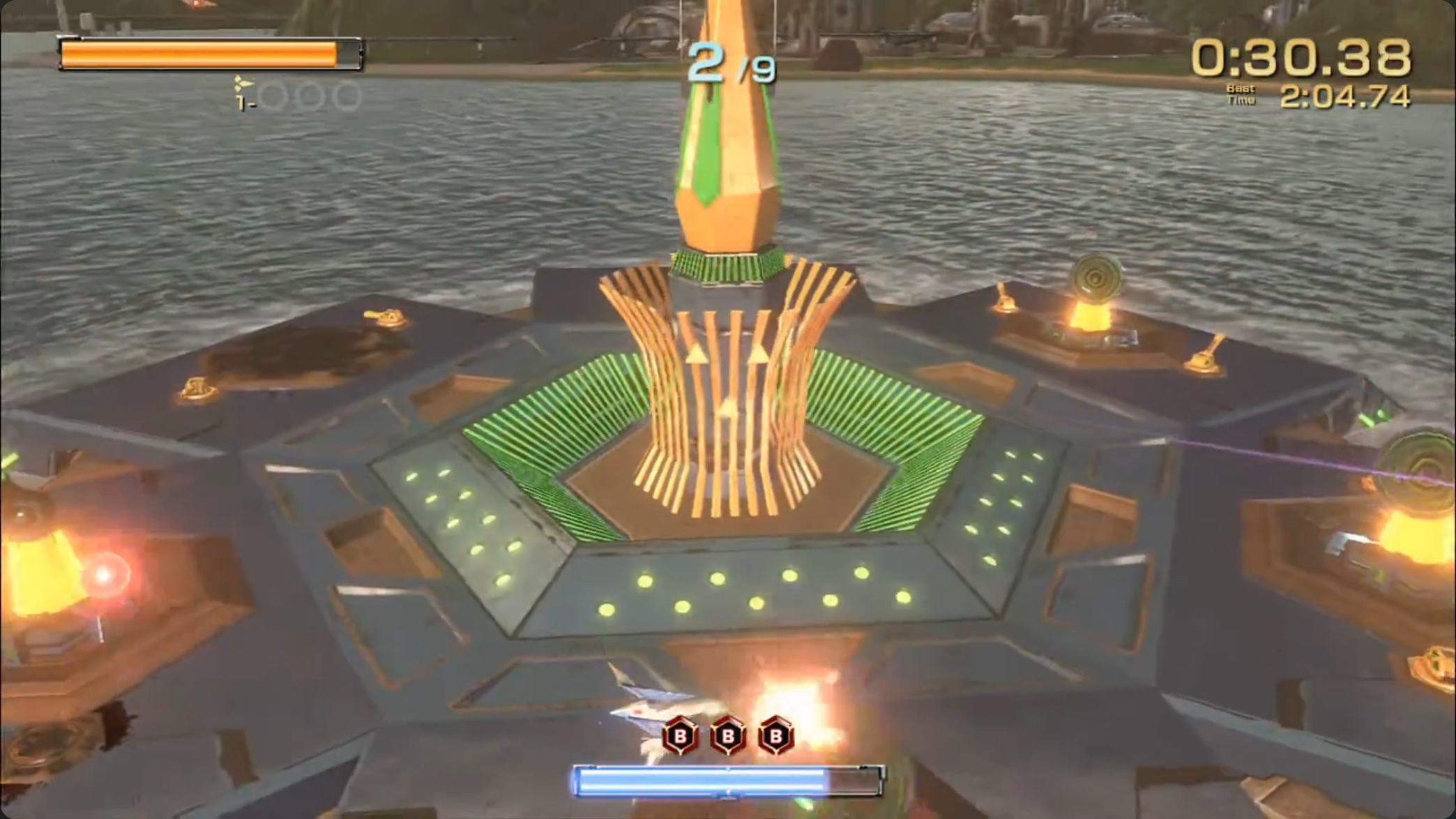
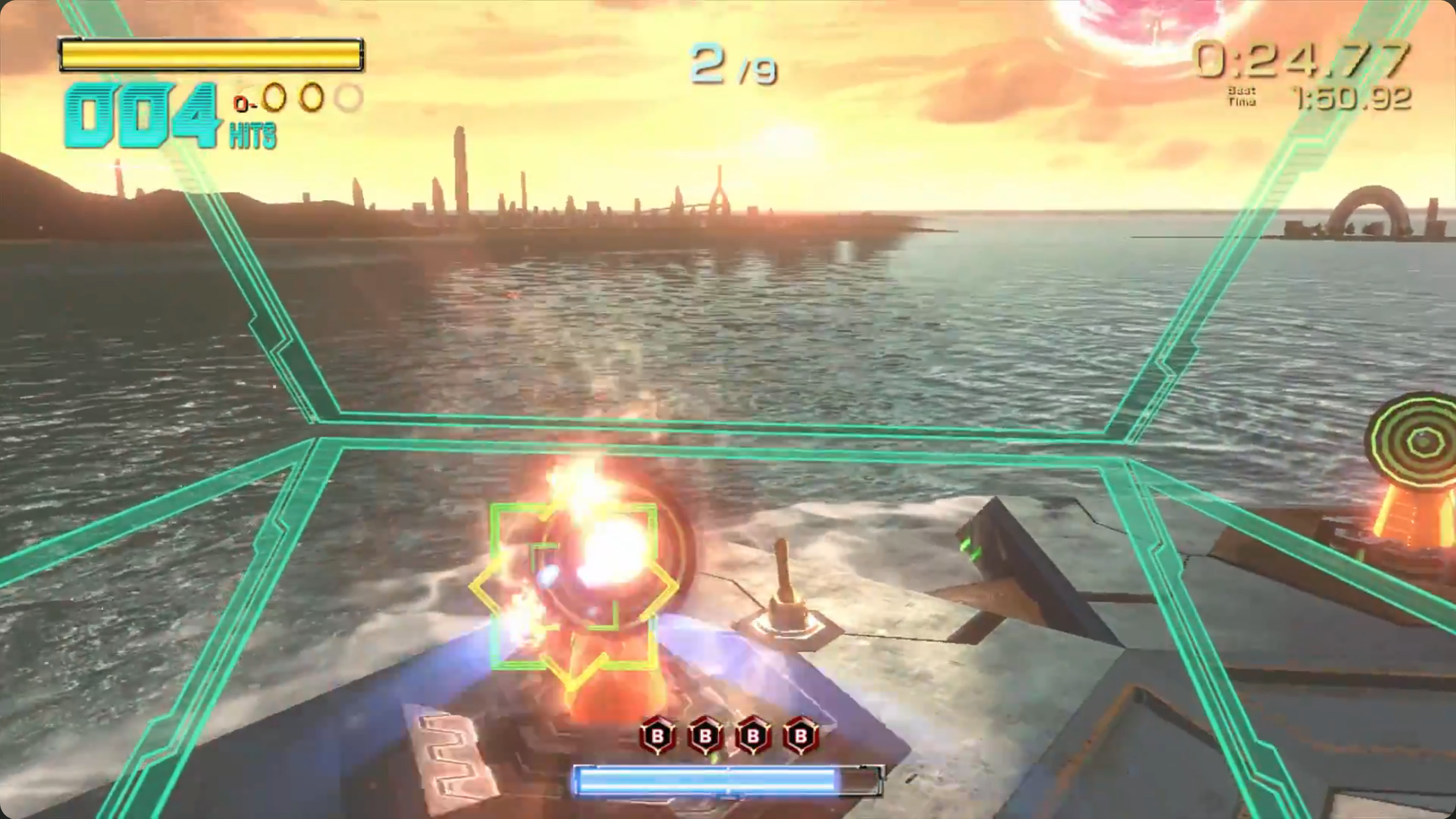
You’d be hard pressed to find someone who doesn’t at least recognize the potential of fully unlocked aiming for a rail shooter like this, but there’s a catch. The aiming reticle shown on the TV loses accuracy the closer you aim to the boundaries of the screen, with a restricted view from the cockpit on the gamepad being the only way to see exactly where any shot will land. To many, this is the smoking gun that kneecaps Star Fox Zero’s potential for fun gameplay (even among those who even moderately enjoy the motion controls) and prevents them from even trying to get into it. I do love this game, but to an extent I get the friction. I mean this with no hyperbole, nothing feels worse than trying to mentally lock in on the TV and having shots miss before you switch your brain over and quickly get over to the cockpit view, even once you become more proficient at the game’s handing this is something that never fully goes away. However, something important to dissect about Zero’s controls is not just how they’re implemented, but why they’re implemented the way they are and what that means for the design of the game around it.
While the TV’s inaccuracies can theoretically be worked around, this restriction all but requires switching between both viewpoints at some point, but not nearly as much as you may believe. With a sharp eye, you’ll come to notice that Zero expands on the systems of 64 in clever ways to account for its new control scheme without stripping the identity of the original, and every change goes some way toward making things a bit smoother to handle. The Arwing’s “auto-fire” achieved by a brief hold of the trigger has been buffed from 3 shots to 5 which naturally covers the player a bit in the event of a scramble, the final upgrade for your ship gives the player access to two lock-on shots at once which can cover a devastating amount of screen space, and maneuvers that once burned your entire meter now only cost half of the bar, resulting in fewer instances of the player getting awkwardly locked out of speed control or evasive tools if you dare to hold the brake for a single second. Levels are chaotic as ever and still expect a lot from the player if one were to go for each of the game’s 70 medals, but there’s a beautiful balance struck here between smart concessions to make the game more accessible and brand new tech to keep the skill ceiling high.
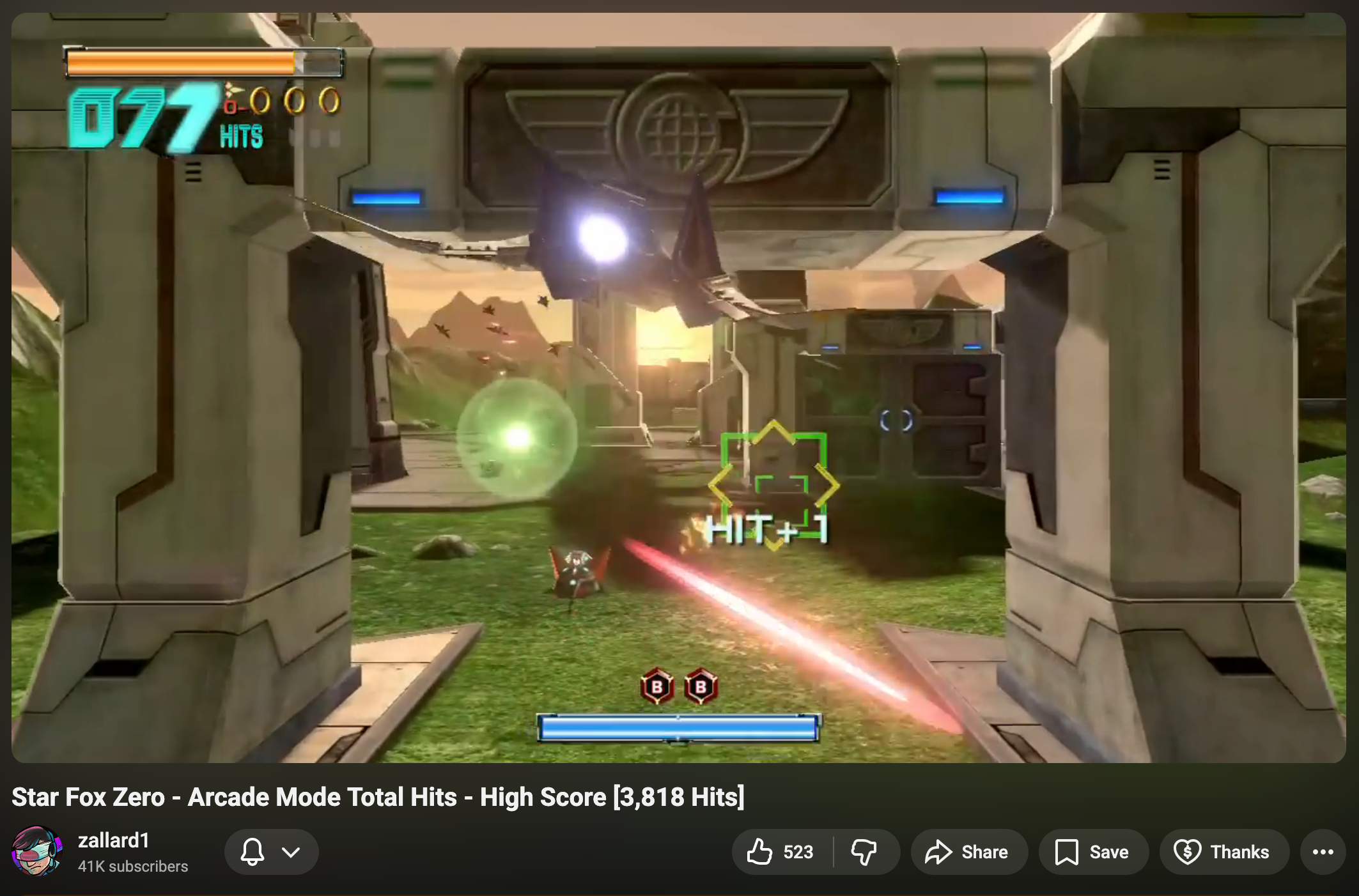
Despite intense gameplay buffs and the ever-present charge shot removing the need to aim 99% of the time if you’re strictly going for survival, looking up and down between the gamepad and the TV is always gonna be an essential part of play, but this is actually where a lot of Star Fox Zero’s magic really comes into focus for me. This is a difficult thing to describe if you haven’t sat down with the game yourself, but having to physically change your periphery to catch every enemy while still having to avoid incoming threats and obstacles is simply enthralling in a way I genuinely don’t think I’ve seen elsewhere. Simply put, this setup forces the player to be way more in control of both the virtual and physical space around them to succeed, with moments where the player must map out obstacles are no longer in the view but still dangerous all the same, all while still trying to maximize score by overshooting charge shots to kill enemies with splash damage and by milking enemies that are in the middle of dying to squeeze just a few extra points out of them.
Perhaps no other area of the game exemplifies this more than in Zero’s version of the dogfights against Wolf and his crew. These were always an enjoyable diversion in 64, but always felt restricted in their execution. Terrain was always largely flat resulting in simple and exploitable maneuvers the player can always comfortably respond to, and unless you’ve already lost a member of your team, it can be pretty easy to just pick them off the map one by one without worrying too much about health or resource management. In Zero however, just as the restrictor plates were removed from the player’s ship, Star Wolf has way less holding them back. One general change in the transition from 64 I neglected to mention was the vertical expansion of the all-range stages, and combined with the greater aiming control, this just lets these fights sing in a way they never could before. Their AI is far more jittery and aggressive in ways that I can’t articulate but can easily be felt in the moment, and their increased range of motion is frankly absurd. While in 64 a last-second somersault was a quick way to turn the tides and easily shred any ship in front of you, here its only one piece of the pie, with sporadic enemy dodges requiring deep steers with the gamepad to try and view an enemy far out of range of what the TV is capable of seeing.
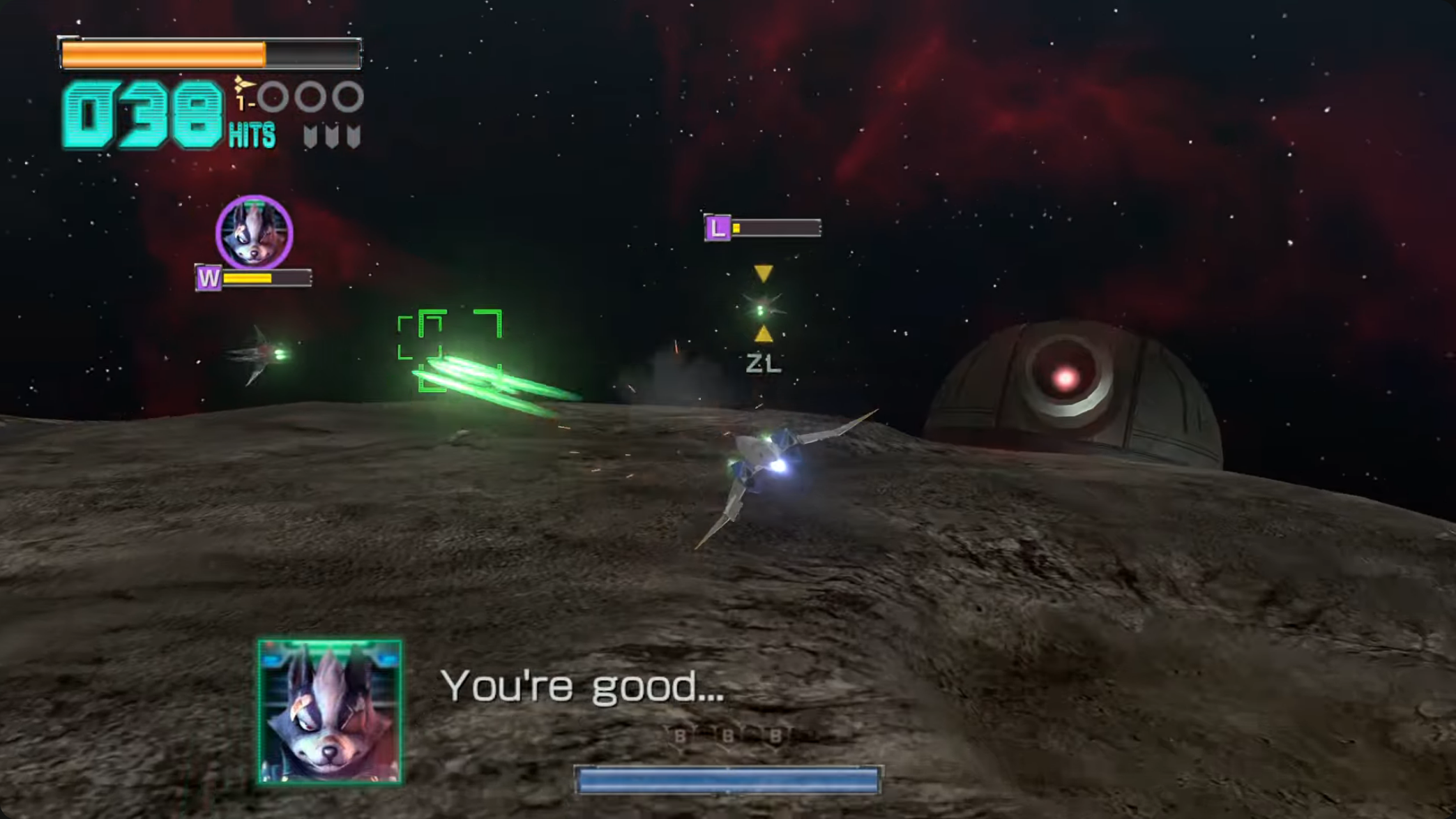 It’s honestly a crime you don’t fight Star Wolf more in this game.
They even have some genuinely new tricks up their sleeve, like a grounded form introduced during the final encounter on a planetoid and cramped underground routes pushing the player towards thrilling hunts if you want to finish the encounter in a reasonable amount of time. This is the type of shit VR games would desperately try to capture while never quite bridging the gap between your body and the screen, but here, Star Fox Zero effortlessly makes you consider your peripheral vision in a way no other input method would be capable of capturing. This isn’t about making things more “realistic”, nor is it about trying to find awkward ways to use the bizarre tech of the Wii U - spacial awareness is like, the entire foundation of the interactive side of the medium, and the fact that a game that plays nothing like anything else crystalizes this better than most games is insane to me.
Star Fox Zero’s complete failure to make an impact on the playerbase at large is nothing short of a travesty to me. I would kill to see a Star Fox game within my lifetime that experiments a bit more with its universe while maintaining the foundational elements of what the series does best, but for a remix of one of the most critically acclaimed games in history, you could do a hell of a lot worse than this. For many, Star Fox Zero stands as a creative low point for the series. A point where its leads totally gave up and bent the knee to gimmicks and nostalgia in service of a game that barely grazes the highlights of what came before. To me, 10 years removed from its original (and at the time of writing, only) release, it stands with pride as a peek at what the future could hold for game design. A future where developers aren’t afraid of designing a game with experienced players at the forefront, a future where games don’t have to conform to the laws of what came before, and above all else, a future where games honor the design of their forebearers in the name of proper evolution.