Mega Man Classic Series Retrospective (Part One)
 The following is a collection of essays I’ve written on the Mega Man series, compiled here for the convenience of the reader and preservation. My goal is to write about most notable entries in the series before the release of Mega Man Dual Override.
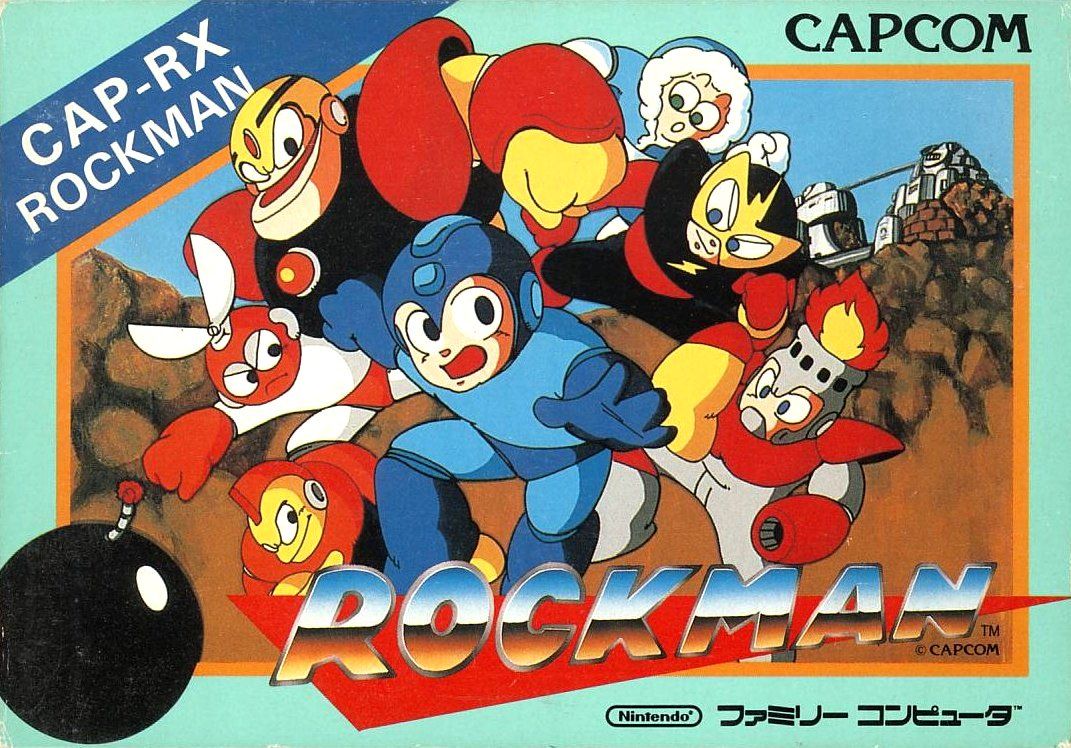
Mega Man Review
Contrary to what my YouTube-munching self from 15 years ago believed, Mega Man is a damn fine first crack at an exceptionally novel idea that still excites and allures me all these years later. While this is assuredly a first draft, coming with all the baggage you’d expect from an era where the ball-knowers of today were still operating during the invention of ball, it’s no surprise in retrospect that this game grabbed an audience quickly. Everything was here and accounted for, and despite dozens of sequels and spinoffs that released over the following decades, this first entry is remarkably playable and doesn’t feel too alien compared to what came after.
Naturally they didn’t get it completely right the first time around, but it’s actually within MM1’s differences that it feels all the more appealing when trying to decide what to play these days. 6 Robot Masters and a poorly considered scoring system that neither adds nor subtracts are obvious stand outs, but it’s the general design philosophy around Robot Masters and their weapons that got my attention this time around. With less slots for weapons comes less opportunity for carryover between various weapons and their functionality (looking ahead, Mega Man 2’s weapon roster features weapons like the Quick Boomerang that are objectively outclassed by the Metal Blade), and while some carryover still exists, weapons here generally target various niche functions or have distinct utilities altogether, like the Ice Slasher turning enemies into platforms or the Super Arm opening the door for single use blocks throughout the stages to be used as strong projectiles.
This limited scope also bolsters the game’s non-linear structure, with fewer choices leading to less choice paralysis on a blind playthrough while simultaneously making subsequent runs easier to customize quickly based on player knowledge and skill. There does exist a disparity between the bosses that were “designed” to be tackled first compared to some tankier foes in the roster, but the occasional optional route opened up by the odd weapon or ability in stages makes the thought of doing weird runs more appealing. Ultimately the “optimal” route has been known for years and experimentation with boss order is only truly rewarded through stages feeling slightly easier or harder depending on when they’re tackled, but in this entry, I don’t think having an open stage order is an active detriment. It’s neat!
If there does exist anything that does actively hold the game back, it’s unfortunately the weapon balance. While having niche weapons that feel awkward to use isn’t necessarily a bad thing, what doesn’t help their case is one weapon that completely dominates all others. The Thunder Beam really is a Swiss Army knife of a tool, leaps and bounds above the rest to the point where I only switch off for platforming or ammo preservation where needed. It feels like a silly thing to make a big deal out of when we know what this series tends to do, but it really is damning here and takes the wind out of your sails whenever you get the itch to mess around with your playstyle.
Beating each of the bosses opens the door to Dr. Wily’s fortress, illuminating all of the game’s worst traits while also shining a focused light on what makes Mega Man unique among its peers. Right off the bat MM1 becomes its most punishing here, with the hardest hitting enemies in the game, difficult to read platforming challenges, and a deluge of instant-kill traps and spikes. Any number of these things could be of great benefit to a game like MM1 where tight control is of great importance, but these moments expose the small quirks to Rock’s ground control that, while not impossible to work around, make the game feel a bit sludgy and awkward to play through in practice (this is a difficult thing to articulate through words if you’ve only played the later Mega Man games, but just a few seconds behind the wheel here makes the control quirks obvious). As with any strange handling model this can be learned and worked around with time, but it just feels too counter to the game’s general shift away from momentum physics and towards razor-precise air control.
If there’s any spot where this approach truly shines, it’s in the Yellow Devil fight. Perhaps the most infamous fight in the series and inarguably the greatest spike in difficulty in the game, this serves as such a steep challenge that it more or less justifies the pause glitch all by itself for many players. Still, despite sporting a difficult to read pattern with the risk of suffering a punishing setback on a game over, the nature of the fight showcase’s the very best of the controls more than any other section of the game. After you pick up on the most important element to the fight (that being the consistency of the Devil’s one attack pattern), you’ll come to find that Rock’s air control is exceptionally tight and precise, far greater than any other game of its era. This precision in control may feel rigid or bland with a certain point of view, but it’s in this consistency that MM1 (as well as later games in the series) is able to really push the player into gameplay scenarios that feel exceptionally fair and rewarding to conquer. Not every game or boss for that matter will take advantage of it, but it’s through this base of control that everything in the series is built on, and this replay of MM1 really brought that into focus for me.
With hindsight it’s really easy to draw up ways this could potentially be improved on, but if anything I think that line of thinking justifies the iterative nature of the series more than the need to fix this entry specifically. They didn’t necessarily need to flip the script, just switch some dials and tweak some ideas and you could easily end up with a radically different experience. Rather than justifying a perfect version of MM1 specially in my head, I think it would do more good to appreciate it as the foundation and ogle at the ways in which the core was remixed through later entries, and for a silly little platformer from the 80’s, I should be grateful to be able to walk away from it with a perspective like that.
 Mega Man 2 Review
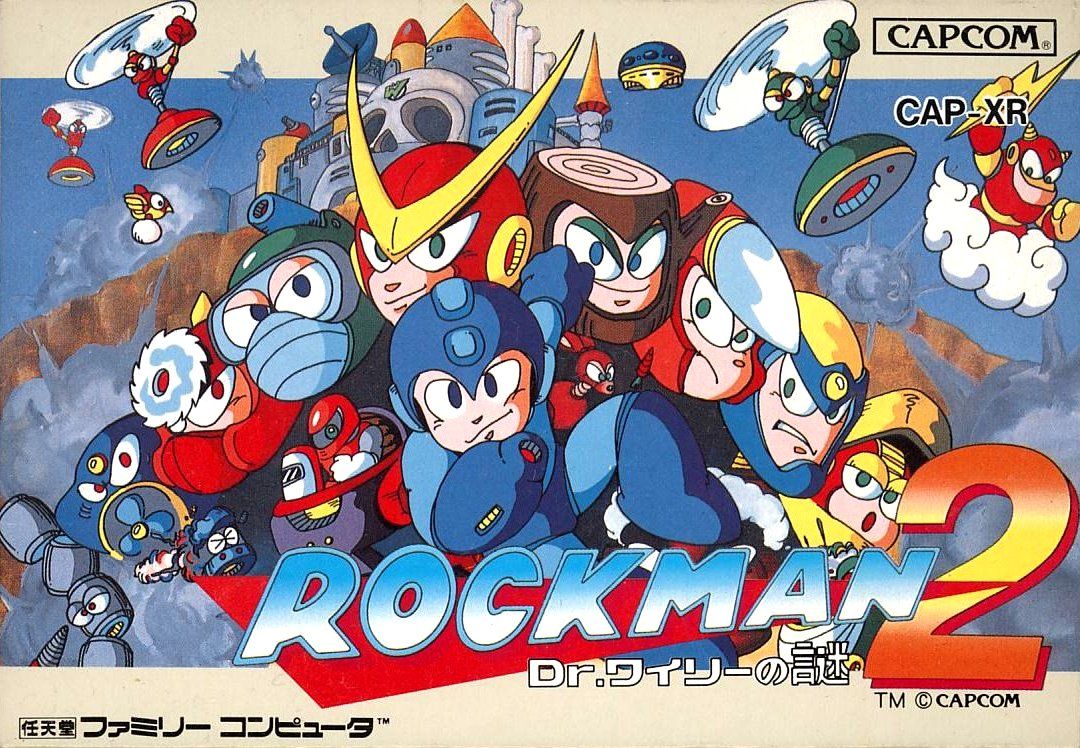
Despite the sentiment that this trait is an indictment of the series, Mega Man’s greatest strength is its ability and tendency to justify itself specifically through iteration. While to many linear refinement should be the goal, MM’s focus on remixing and shuffling its core design tenants is what has truly allowed for this series to blossom with time. This is apparent as early as Mega Man 2, a title with legs long outreaching any other entry in the series, and not for no reason.
Looking back, it’s kinda ridiculous how much of the series’ texture was established in this one. The expansion to 8 Robot Masters, refinement to Rock’s general control by shaving down to startup to ground movement, the streamlining of acquiring the “item” power-ups (this game’s expansion on the Magnet Beam from MM1), and some solidifying of the general weapon archetypes each game will generally abide by going forward. It’s all here and accounted for - a shield, ground tracer, vertical shot, an early instance of a chargeable attack, and more common tropes make an appearance here. Hindsight is 20/20, but it’s pretty apparent why this was the game to copy moving forward.
Stages as well see a nice bit of refinement here, with the armormentioned adjustments to moment to moment control allowing for platforming challenges that ask far more from the player. While these moments are admittedly few and far between, stretches like the infamous block section of Heat Man or the laser gauntlet of Quick Man’s stage are great showcases for Mega Man’s newfound tightness in control. However, that’s not to imply this level of control inherently makes these challenges easier.
MM1 was always rather notorious for its unforgiving platforming and general gameplay, and that has not been lost in the sequel. Many sections here are not afraid to make simple mistakes lead to steep setbacks, no doubt a decision that may feel alienating to newcomers, but the developers managed to throw in a few bones to help alleviate any potential frustration. The previously mentioned “Items” (god what a dumb name lol) help to fill particular niches in mobility from rising platforms to long-lasting jets, and their placement throughout the game leads to a nice degree of flexibility in how you tackle the game’s expanded roster of bosses.
The most common starting stretch of bosses will take you from Metal>Bubble>Heat, dropping you into the hardest platforming challenge in the game without any easy way out. However, by taking a detour to take down Air Man early you’ll be granted Item 2, allowing you to jet right past the tricky section in Heat Man without any hassle. Once again, something resembling an “optimal path” will exist no matter what, but the solution presented here allows for an enjoyable level of flexibility to display mastery - while the core formula of Mega Man isn’t a terribly expressive one, saving time by demonstrating particular skills and avoiding detours justifies the open stage order alone here.
If there’s something that doesn’t do the open stage order any favors though, it’s once again down to the weapon balance. I know it’s a moot point by now to complain about the Metal Blade, but truly, I can’t help but scratch my head at the decision to juice it up so much here. Strangely enough it doesn’t feel like an oversight, rather a cheeky choice on the part of the developers to make one particular weapon stand heads and shoulders above the rest (4 of the 8 Robot Masters are weak to the Metal Blades, including Metal Man himself in the boss rush amusingly).
This strength extends far beyond the reaches of boss weaknesses though, covering every possible angle and position on the screen with such a negligible cost that there’s no reason to switch off unless you’re forced to. I could maybe see a justification for this if the rest of the weapons picked up the slack, but unfortunately most of them are either too situational or not terribly fun. A common trait among weapons in MM2 is in firing rate, which in retrospect could have been an interesting way to balance your arsenal, but as it stands, DPS weapons as well as niche weapons meant to cover blind spots on the screen are both equally outclassed by the Metal Blades.
Part of me wonders if Capcom recognized how worthless a lot of these tools feel in execution, because the final stretch of castle stages at the end of the game swing aggressively in the opposite direction. Weapons and items being built for particular uses at the end of the game where you’re guaranteed to have them all isn’t an explicitly bad thing (especially if they have distinct utility like we’ll see later in the series), but man that style of lock-and-key weapon utilization here just isn’t very exciting. Rather than proper tests of platforming prowess, Mega Man 2 largely falls back on testing the player on what tools to use where, with many sections outright demanding the use of specific weapons to proceed.
Made worse is just how stingy certain sections can be with ammo pickups, requiring very particular sections for grinding if you haven’t balanced your resources accordingly. While this resource management could be an interesting challenge right at the end had the distribution and design of these sections been altered, as it stands its simply better to avoid using these “keys” altogether in place of more dominant weapons so you can save your ammo strictly for the sections that require them. It feels like a shockingly amateurish oversight when so much of this formula already feels so forward thinking as early as the 2nd entry.
Despite not coming together fully as a polished package, I’d be hard pressed to argue that Mega Man 2 doesn’t deserve some amount of its reputation. For as much as I’ve complained about weapon balance and endgame stages, this remains my most played game in the series by a landslide, and it’s not hard to see why. Bitchin tunes, iconic stages, readable bosses, there’s just so much to love. Even the weapon balance, for as poorly considered as it is, makes the game an absolute delight to rip through once you know the lay of the land. It may not be terribly refined, but I would be lying if I said it’s been wholly invalidated.
 Mega Man 3 Review
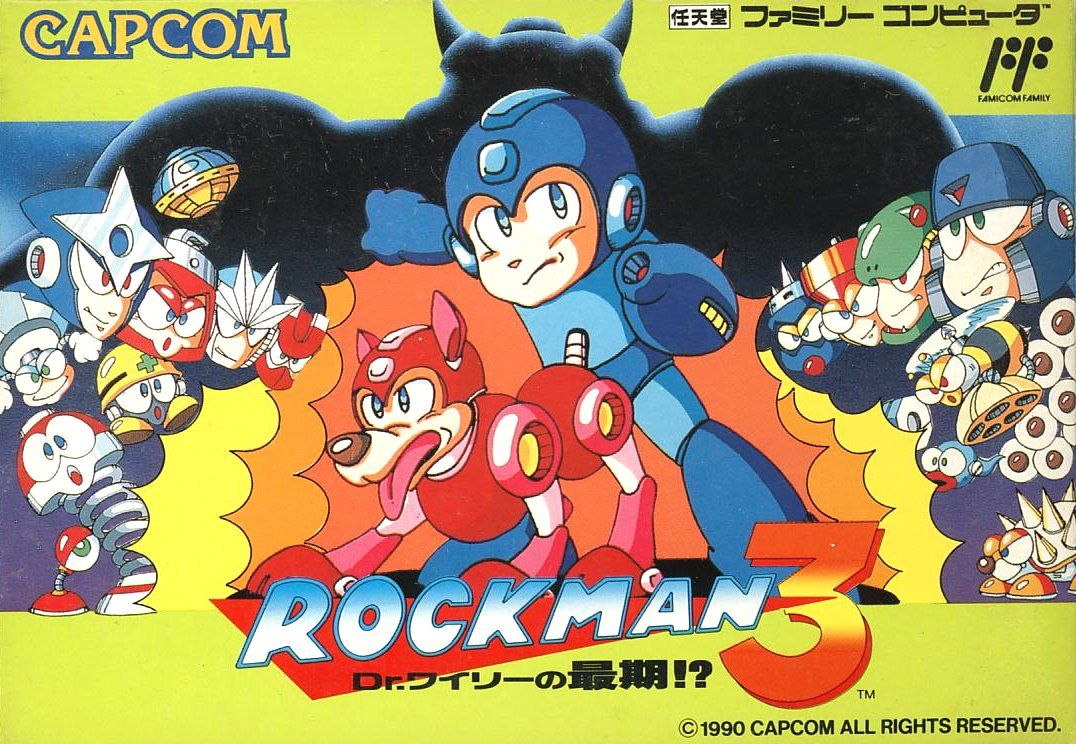
A big reason why Mega Man has been one of my hyperfixations at the moment (beyond the fact that Dual Override looks so good) is that I’m not really that familiar with the series. Cards on the table, the only ones I’ve played in the classic series are 1, 2, 6, 9 up to the castle, and 10 (and many of those I hadn’t played for years before this point). One particular game of interest to me was Mega Man 3, a game sampled religiously during my iMac emulation days on a keyboard in middle school where my exposure to the era was limited to that nightmare of a setup, disparate Wii VC, titles YouTube let’s plays/reviews, and my NES with a collection of 21 games I bought from my late uncle for a Jackson.
In some respect I do owe a lot to MM3 - among every game in the classic series it served as a particularly elusive one to me, one I never quite dedicated proper time to but one I always had on the dome. I’d daydream about how cool the Doc Robot rematches were gonna be and hum along to the soundtrack that refused to leave my mind palace, all while refusing to actually play more than a single Robot Master any time I stepped up to the plate over the years. Well, after this time I’ve finally dedicated myself to a playthrough of the game, and turns out that innate hesitation I felt to thug it out was for a pretty sound reason: it’s just not that good!
Let me back up a little bit. While Mega Man 3 represents another step in the chain of creatively shifting the formula around, many of its ideas feel poorly considered of flat-out unfinished (we’ll get to it). Back in my review of Mega Man 2 I implied that iteration takes precedent over refinement with each of these entries, and I feel as though I need to clarify that point a bit. As we’ll see with each entry in the classic MM series, just about every game adds some sort of radical shift that changes the game and makes it feel wholly unique. 1 is naturally more limited in scope, but 2 adds more Robot Masters and mobility tools. 3 adds the slide as well as the number of stages in the endgame, and 4 onward all make substantive buffs to Rock’s default kit with the introduction of the Mega Buster. With the additions in 3, you may be inclined to believe the base of the game has been linearly improved, but this does not consider the shift in the design present in the game’s stages, bosses, and weapons.
MM3 is arguably the start of an era many would consider to be forgettable, a point that always seemed harsh to me, but now that I’m on the other end of the experience I think I understand why. This is where the series decided to get cute with its theming, shifting away from flat elemental cues in the design of its Robot Masters and instead allowing for more specific ideas to take shape. It’s easy to make fun of Top Man, but the whole roster is pretty weird from the outside looking in: Snake Man, Gemini Man, and Hard Man are just a few on the roster that struggle to impress, which is strange to me considering how many games tend to have the opposite problem. Basic elemental/seasonal themes in enemies and stages tend to be the most forgettable, while the quirky themes tend to stick out more. Perhaps this speaks more to the quality of 2’s roster than a lack of quality here, but I’m not inclined to give it as much grace due to the additional baggage these bosses carry.
With each bizarre theme comes an equally weird stage and weapon, and I think this is where the core of MM3’s problems start to materialize. Barely any ideas feel like a finished idea - everything strikes me as fanart or concept material, scrapped together as potentially cool things to include as in a Mega Man game without any of the design considerations to back it up. 4 of the game’s 8 weapons fire in a straight line with the only changes being in their startup or impact, at their best you get a punch that ends in an explosion, but more often than not you’re stuck with an unimpressive Needle Cannon or a Gemini Laser that moves slowly, thanks the framerate, and takes forever to bounce around the screen. To give some credit there are a few interesting weapons in the lineup, namely the Magnet Missile that aims in two cardinal directions to lock onto targets. the Shadow Blade that feels like a more balanced yet crappy feeling Metal Blade, and the Search Snake to cover enemies too low to hit with the Arm Cannon but most of the spread here sucks.
The stages do admittedly fare a bit better though, occasionally sporting at least one gimmick or set-piece that made me grin. Platforms that rise into death spikes in Spark Man’s stage, sporadic cloud platforms in Snake Man’s stage, and the lights turning off in Shadow Man’s stage are all standout moments, but it all feels scattered and uneven. The most consistent element to the stages are a surplus of enemies that incentivize frequent use of the slide for evasion, and it just feels great, I can’t complain about it at all. It does feel like Capcom crammed way more small enemies that can’t be hit with the regular shot from standing height, requiring patience on the part of the player for the enemies to get into vulnerable zones themselves, but again, the slide goes a long way toward making them more enjoyable to fight.
Reflecting on the experience also has me realizing more than ever that this game’s world is just not cohesive in the slightest - maybe not the most crucial complaint in the world, but certainly not something that does this game any favors. Admittedly, this is a problem present in Mega Man 2 as well, where the general theme of the Robot Master felt at odds with the general idea of the stages, or at the very least displayed some amount of disconnect. This cropped up in various forms, whether through enemies like the Chickens in Wood Man’s stage or the Jester dudes in Metal Man’s stage, but an astute player may notice some other oddities like how Heat Man’s stage is clearly a reskinned sewer level they palette swapped to feature lava instead of water.
Looking into the development of the game, it becomes obvious why this was the case. Mega Man 2 was functionally a side project as far as the upper management of Capcom was concerned, being worked on in the spare time of the developers after their main work on other projects was done. In many respects the work on this game was scattered and messy, and this crops up in the continuity of the game’s Robot Masters. For the first time in the series, Capcom held a contest allowing fans to submit designs for Robot Masters in the upcoming Mega Man 2, but important to note is that the stage designs were completed before the contest concluded, forcing Capcom to retroactively go in and find bosses that more-or-less fit the bill for the stages they had constructed, shifting small things around where possible to make things fit together (ie. the lava in Heat Man’s stage).
While I lack specific insight on the development of MM3 with respect to the stages, the presence of a design contest for the bosses present in a game with disparate uneven ideas leads me to believe something similar had to have happened here, and has probably happened repeatedly since (Dual Override reaffirms this thought where stages and themes are designed first, as Capcom’s call to action this time around was for a Robot Master that has “a right arm with immense suction powers!”). Once again I must stress: I don’t know if the ideas feel messy here due to mismanagement, but one thing is for certain: Mega Man 3 isn’t just a poorly considered game creatively, it’s a blatantly unfinished one as admitted by Keiji Inafune.
One such idea that feels, if not unfinished then certainly unpolished, is the Doc Robot stages. In an effort to expand the content on offer compared to the first two games, MM3 throws the player back into remixes of 4 of the 8 stages after beating all the Robot Masters to hunt down clones of the crew in MM2. Of all the new ideas in the game, this jumps out to me as by far the most interesting: shuffling enemy placements and adding additional hazards with the expectation that the player is now fully kitted out is a novel one, and going through the stages the 2nd time around was, at times, more enjoyable than they were the first time around.
What holds these back entirely are the Doc Robots themselves, what should be a breezy spread of bosses before the endgame (assuming some preexisting familiarity with MM2) turns into frustration as you grapple with the fact that each of these fights have been made considerably larger than they were in the past. What seems like a small change on paper makes them way more frustrating to fight in execution, all but requiring restorative item usage for many players, or if nothing else, arrogance in the face of frustrating walls. They’re all built off the bones of the bosses in MM2 so it’s not like they’re all the most “difficult” in the world, but looking at them with unclouded eyes I wouldn’t argue they’re all the most interesting to fight in any context, and unfortunately, they aren’t shown in the best light here.
Wily’s Fortress at the end of the game similarly feels like a set of levels from a scrapped beta - while they never fall into the same traps 2 did, they’re all just really boring. Hallways with easy enemies, a surplus of items to push the player past any potential challenge, and stage hazards that really only stand to be annoying bumps without real consequence. Perhaps graciously they’re all so quick that they’re easy to just zoom past through, and it’s not like anything here is outright offensive, but I just wish I had more to talk about. At least the Yellow Devil is back and largely intact.
For as much as I’ve spent this entire review exclusively rambling about what I didn’t like about Mega Man 3, I want to reiterate that it’s not offensive in any particular way. Most stages are ok at best or bland at worst, bosses are forgettable, and on the whole the game isn’t challenging in the places where it should matter most. But perhaps that’s the most unfortunate thing about this game: The only thing worse than an outwardly bad game you can learn from is a boring one you don’t think too hard about, and the only thing MM3 leaves me to reflect on is what it’s missing compared to what came before or after. At least the soundtrack still kicks ass.
Comments
You can use your Bluesky account to reply to this post.